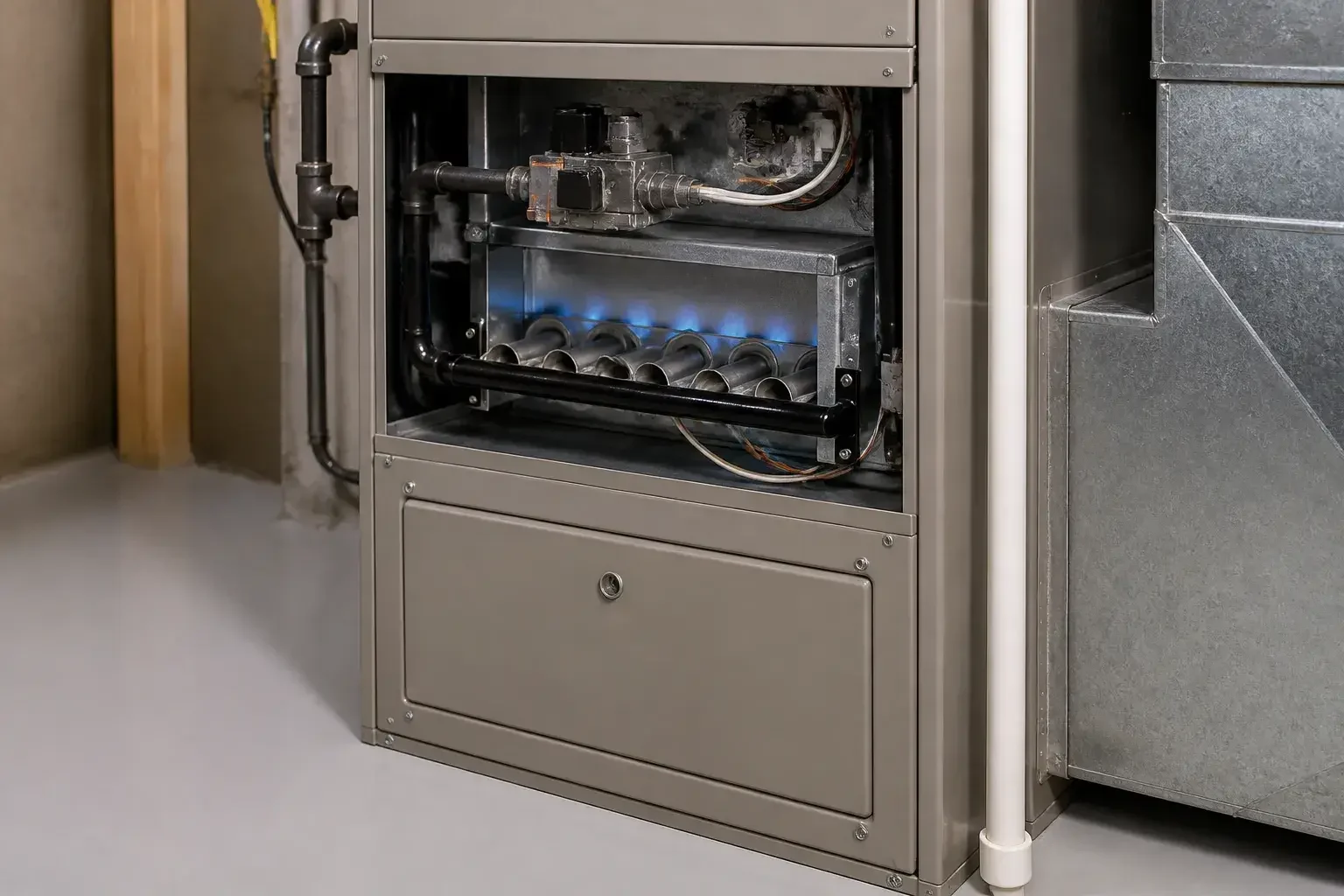
Furnace Repair in Longmont, CO
Cold rooms and a failing furnace need fast, careful repair before comfort slips further.
A furnace that starts acting up rarely does it quietly. You may notice the air from the vents feels cooler than it should, the thermostat keeps calling for heat, or the system starts and stops before the house really warms up. Sometimes the problem shows up as a rattling sound, a burning smell, or a furnace that runs but never seems to keep up.
If that sounds familiar, Pine Hollow HVAC can help. We repair furnaces for homes in Longmont and nearby Boulder County communities, and we focus on getting to the root of the problem instead of masking it. Whether your system is making noise, struggling to heat evenly, or refusing to turn on when you need it, the next step is a careful diagnosis and a repair that matches the actual issue.
Warning signs
A furnace often gives a few clues before it stops working completely. Paying attention early can keep a small issue from turning into a colder house and a bigger repair.
- Uneven heat: Some rooms feel warm while others stay chilly, which can point to airflow trouble, a failing part, or a furnace that is not cycling correctly.
- Short cycling: The furnace turns on and off too often, which may happen when a component is overheating, a sensor is failing, or airflow is restricted.
- Strange noises: Banging, scraping, humming, or repeated clicking usually means something inside the system needs attention.
- Weak airflow: If the vents are pushing less air than usual, the blower, filter, or ductwork may be affecting performance.
- Unusual smells: A dusty smell at first startup can be normal, but persistent burning, electrical, or musty odors should be checked.
- Rising utility use: A furnace working harder than it should can use more energy while still leaving the house uncomfortable.
If your furnace is showing more than one of these symptoms, it is worth having it looked at sooner rather than later.
Common causes
A furnace problem can start in one part of the system and show up somewhere else. The goal of a repair visit is to identify what is actually failing, not just the symptom you notice first.
- Ignition trouble: If the furnace has trouble lighting, you may get no heat at all or a system that keeps trying to start without success.
- Blower issues: A worn blower motor or related component can leave the house with weak airflow, uneven temperatures, or frequent shutdowns.
- Dirty or blocked airflow: A restricted filter or buildup in the system can make the furnace strain and overheat.
- Faulty sensors: A bad limit switch or flame sensor can cause repeated cycling, poor heating, or a furnace that shuts off unexpectedly.
- Thermostat problems: Sometimes the furnace is fine, but the control signal is wrong, delayed, or inconsistent.
- Electrical faults: Loose connections, worn parts, or control board issues can cause intermittent operation that is hard to predict.
Not every furnace issue sounds dramatic. In many homes, the first sign is simply a house that no longer warms the way it used to.
How we diagnose
A careful diagnosis is the fastest path to a useful repair. When we arrive, we look at how the furnace is behaving as a whole, then narrow down the cause.
What we check
- Start-up sequence: We watch how the furnace begins its cycle to see where the process breaks down.
- Airflow and heat output: We look at how air moves through the system and whether the furnace is delivering steady heat.
- Visible components: We inspect key parts for wear, loose connections, buildup, or signs of failure.
- System response: We check whether the furnace responds correctly to the thermostat and shuts down the way it should.
Why that matters
A furnace can appear to have one obvious problem while another part is actually causing it. By checking the whole sequence, we can avoid guessing and focus on the repair that makes the most sense for your system.
Repair options
The right repair depends on the condition of the furnace and the part that is failing. Some problems are straightforward, while others need a more detailed fix to keep the system operating properly.
- Ignition repair: If the furnace will not light reliably, we address the ignition-related issue so the system can start correctly again.
- Blower repair: If airflow is weak or inconsistent, we look at the blower assembly and related parts that move heated air through the home.
- Sensor replacement: If the furnace shuts off too soon or keeps cycling, a failing sensor may be the reason.
- Electrical repair: If the furnace is behaving inconsistently, loose or worn electrical connections may need attention.
- Control troubleshooting: If the furnace is receiving the wrong signals or not responding properly, we trace the issue through the control side of the system.
We explain what is going on in plain language before any repair moves forward, so you know what needs to be done and why it matters.
What to expect
A furnace repair visit should feel organized and straightforward. Most homeowners just want the heat back without a lot of confusion, and that is how we approach it.
- Listen to the symptoms: We start by hearing what the furnace has been doing and when the problem began.
- Inspect the system: We check the furnace and its key components to find the source of the failure.
- Test the operation: We run the system and observe how it performs under normal conditions.
- Make the repair: We fix the issue once we have identified the cause, rather than changing parts at random.
- Confirm performance: We verify that the furnace is heating and cycling the way it should before wrapping up.
That process helps us catch the issue behind the issue, which matters when a furnace problem has been building for a while.
When to call
Some furnace issues can wait a little. Others should not be ignored. If you are unsure, it is usually safer to have the system checked than to keep pushing it through another cold spell.
You should schedule service if:
- The furnace runs but the house still feels cold.
- The system keeps shutting off and restarting.
- You hear scraping, banging, or repeated clicking.
- The vents are pushing much less air than usual.
- The thermostat setting does not match the comfort in the home.
- The furnace starts, then stops before heating the space properly.
If you live in Longmont, Boulder, Niwot, or Firestone, Pine Hollow HVAC can help identify the cause and get the furnace back on track.
Furnace care tips
A few habits can reduce strain on the furnace and make problems easier to spot early. These are simple, practical steps that help the system work more consistently.
- Change the filter on schedule: A clean filter supports airflow and helps the furnace breathe more easily.
- Keep supply vents clear: Furniture, rugs, or other items blocking vents can affect how heat moves through the home.
- Watch for new noises: A sound that starts suddenly is often a clue that something has changed inside the system.
- Pay attention to startup behavior: If the furnace begins cycling differently than usual, that is worth noting before the issue gets worse.
- Do not ignore repeated resets: If you keep having to restart the furnace, there is likely a problem that needs attention.
These steps do not replace a repair, but they can help you catch trouble earlier and make the system easier to diagnose.
Common questions
Why is my furnace blowing cool air?
A furnace may blow cool air because it is still warming up, but if that keeps happening, there may be an ignition, airflow, or control issue.
Why does my furnace turn on and off so often?
Short cycling can happen when the furnace is overheating, sensing a fault, or not moving air the way it should.
What does a clicking furnace mean?
Repeated clicking can point to ignition trouble, an electrical issue, or a component that is trying and failing to start.
Why is airflow weaker than usual?
Weak airflow can come from a dirty filter, blower trouble, or a restriction somewhere in the system.
Should I keep running a noisy furnace?
If the noise is new or getting worse, it is better to have it checked rather than keep running it and risk more damage.
Can furnace problems affect comfort in different rooms?
Yes. A furnace issue can make heat distribution uneven, leaving some spaces warmer than others.
Local help
When a furnace stops heating the way it should, the fix starts with careful diagnosis and a repair that matches the problem. Pine Hollow HVAC works on furnace repair for homes across Longmont and nearby communities, helping homeowners get steady heat back without the guesswork.
If your system is making unusual noises, struggling to start, or leaving the house colder than it should be, we can take a closer look and explain the next step clearly.
How We Work
A Clear HVAC Process
Every job starts with a careful look at your system and a straightforward explanation of what it needs.
Assess the System
We check the equipment, airflow, and likely problem areas before recommending a solution.
Explain the Options
You get a clear explanation of what we found and what makes sense for your home.
Complete the Work
We finish the job carefully and leave the area clean.
FAQ
Common HVAC Questions
If you have questions about your heating or cooling system, send us a message and we will help you sort through the options.
How do I know if my furnace needs repair?
Unusual noises, weak heat, or frequent cycling are common signs. A system check can help determine what is going on.
When should I replace my air conditioner?
If your AC struggles to cool the home or needs repeated repairs, replacement may make more sense. We can help you review the condition of the system.
Are heat pumps a good fit for my home?
Heat pumps can be a practical option for many homes that want efficient heating and cooling in one system. The right fit depends on your layout and comfort needs.
Why does duct cleaning matter?
Dirty ducts can affect airflow and send dust through the home. Cleaning them can help improve the way your system moves air.
Do you help with older HVAC systems?
Yes, we work on many common residential systems. We will look at the equipment and explain what repair or replacement path makes sense.
Get started
Ready for Better Home Comfort
Tell us what your system is doing, and we will help you plan the next step for repair, installation, or maintenance.